15 Módulo de transferencia de calor & inglés terms
These words will be part of the second activity of the module
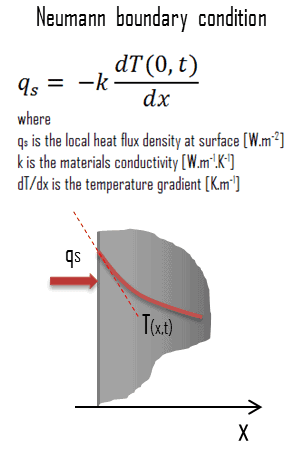
Boundary conditions
Noun
a condition that is required to be satisfied at all or part of the boundary of a region in which a set of differential equations is to be solved.
Example: Expertise is necessary to apply the appropriate BOUNDARY CONDITIONS and forces to the model to extract the relevant data.
en: Condiciones de borde
Emissivity
Noun
Emissivity, formerly called emittance, is the proportion of thermal radiation emitted by a surface or object due to its temperature. Spectral directional emissivity is defined as the ratio between the intensity emitted by the surface in a particular direction and the intensity that would be emitted by a black body at the same temperature and wavelength.
Example: The total emissivity is obtained by integration over the entire electromagnetic spectrum and all of space. The smaller the emissivity value, the better insulating by reflection this surface will be, with 1 being the maximum value.
en: Emisividad
Energy balance
Noun
It is the law of conservation of energy that states that energy cannot be created or destroyed (except in nuclear processes). This law is also called the first principle of thermodynamics.
Example: To gain quantitative understanding of the surface energy exchange by these four processes, a representation of the surface ENERGY BALANCE is required.
en: Balance de energía
Heat conduction equation
Noun
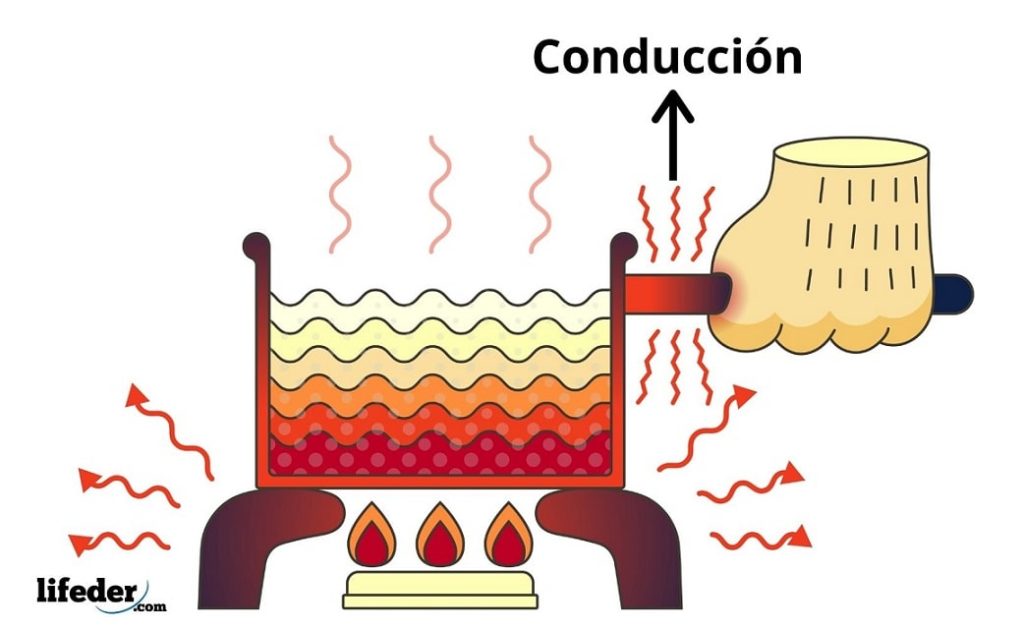
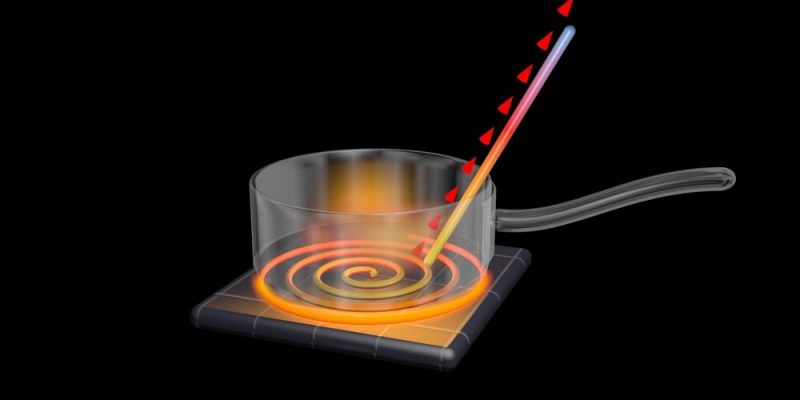
It is a process of heat transmission based on direct contact between bodies, without matter exchange, because heat flows from a higher temperature body to a lower temperature body that is in contact with the former.
Example: The heat conduction can be seen in the pan that I have in my kitchen
en: Ecuación de conducción de calor
Heat flux
Noun
Is a flow of energy per unit of area per unit of time. In SI its units are watts per square metre (W/m2). It has both a direction and a magnitude, and so it is a vector quantity. To define the heat flux at a certain point in space, one takes the limiting case where the size of the surface becomes infinitesimally small.
Example: The second experiment measured sensible HEAT FLUX (H ) by the eddy correlation method. The third experiment measured momentum and HEAT FLUXes by the profile method.
en: Flujo de calor
Heat generation
Noun
The total heat output of a reactor core is called the heat generation rate. The heat generation rate divided by the volume of fuel will give the average volumetric thermal source strength.
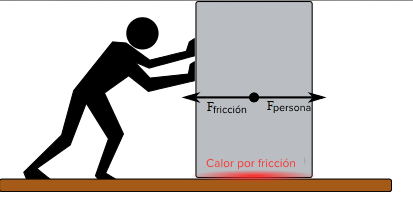
Example: The generation of heat in an element is produced sometimes by the friction of the same
en: Generación de calor
Insulation
Noun
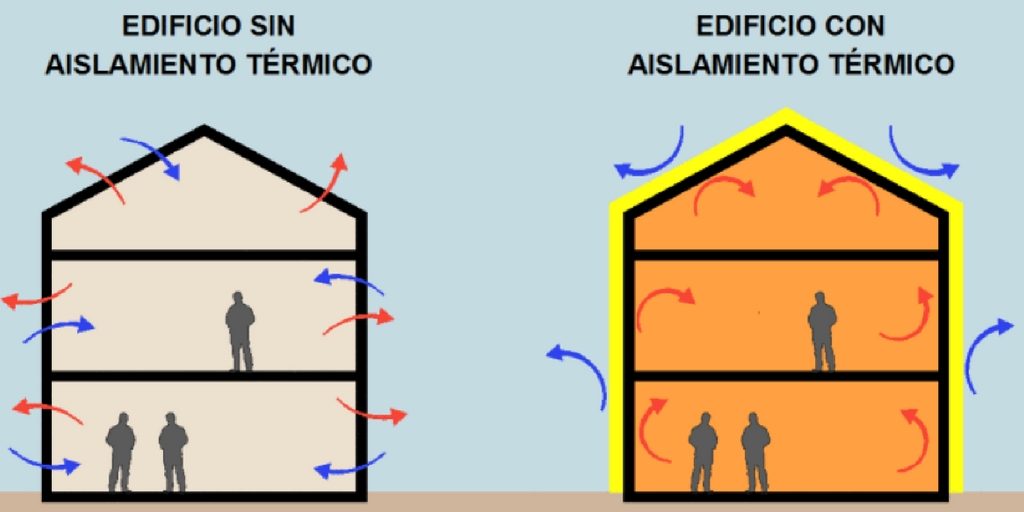
It is the set of materials and installation techniques that are applied in the construction elements that separate a heated space from the outside or from other spaces to reduce the transmission of heat between them. Likewise, it is used to reduce the transmission of heat from pipes that transport fluids at different ambient temperatures. It also applies to the action and effect of thermal insulation.
Example: The high temperatures of 650°C - 700°C may still be enough to damage INSULATION and anneal the conductor though.
en: Aislamiento
Internal energy
Noun
the energy in a system arising from the relative positions and interactions of its parts.
Example: The change in INTERNAL ENERGY (U) of the system is equal to the heat added (Q).
en: Energía interna
Linear function
Noun
is a function whose domain is all real numbers, whose codomain are also all real numbers, and whose analytic expression is a first-degree polynomial.
Example: Linearity in the MCA means the calibration can be correctly assumed to be a LINEAR FUNCTION.
en: Función lineal
Nuclear energy
Noun
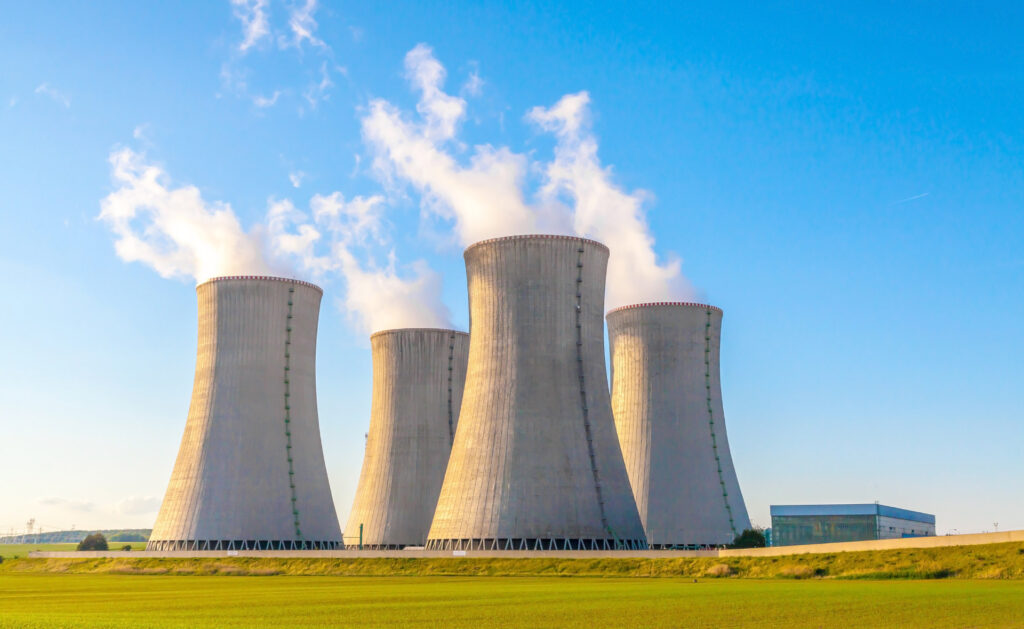
It is the energy that is released as a consequence of the reaction that occurs when the heavy atomic nuclei divide. This is also called Nuclear Fission.
Example: Discussions earlier in this report pose the question of why Mobbs is so pessimistic about the role of NUCLEAR ENERGY in the future.
en: Energía nuclear
spherical
Adjective
shaped like a circle
Example: The average diameter is 7.42cm, so the average radius is: Assume this potato is SPHERICAL, and the equation known as: V = 4 3 π r3 As we measured, the mass of this potato is 210.96g.
en: Esférica
Thermal conditions
Noun
Air temperature, Temperature of the walls and objects that surround us, Air humidity, any thermal environment that causes tensions in the person that activates their natural defense mechanisms to maintain the internal temperature within its normal range, constitutes an overload.
Example: the human body transmits heat to the environment to such an extent that it can break the worker's thermal equilibrium, and tend to increase his core body temperature.
en: Condiciones térmicas
Thermal conductivity
Noun
Thermal conductivity is a physical property of materials that measures heat conduction capacity. In other words, thermal conductivity is also the ability of a substance to transfer the kinetic energy of its molecules to adjacent molecules or to substances with which it is in contact.
Example: The THERMAL CONDUCTIVITY and thickness of the material determine the rate of heat penetration.
en: Conductividad térmica
Thermal diffusivity
Noun
is the value obtained by dividing the thermal conductivity of a certain material divided by the product of the value of its density and its specific heat capacity.
Example: Initial spore load: The severity of the process depends on the initial spore load; good factory hygiene keeps this low.Thermophysical properties : The THERMAL DIFFUSIVITY is the controlling factor.
en: Difusividad térmica
Thermal symmetry
Noun
A special case of this condition corresponds to the perfectly isolated surface for which (∂T / ∂x = 0). Heat transfer through a properly insulated surface can be considered zero, as proper insulation reduces heat transfer across a surface to negligible levels.
Example: Thermal material has perfect thermal symmetry